At PLES, we specialize in delivering comprehensive geotechnical testing services designed to meet the unique needs of our clients. Our expertise spans a wide range of soil and rock testing, performed with precision and reliability using advanced equipment and methodologies. Explore our services to see how we can support your projects with innovative solutions and trusted expertise.
Moisture content determination gauges the amount of water present in materials like soil, which varies depending on the soil type. For instance, peat soil typically holds much more moisture than clay soil due to its organic composition and structure. In construction, soil moisture content plays a critical role in determining strength and compaction characteristics. Geotechnical engineers rely on moisture content data to assess how soil will perform under various loading conditions, such as the weight of buildings or the stress from road traffic.
The purpose of determining soil density is to evaluate the weight of soil within a specific volume. The determination of soil density is a fundamental test in geotechnical engineering where it can help classify the soil type, which is important for understanding its characteristics, and understanding this can help in assessing how the soil will behave in different environmental conditions. In addition, the density of soil provides insights into its strength and stability, predicts soil behavior under load, and is used to calculate the soil bearing capacity in foundation design.
The objective of determining linear shrinkage is to measure the percentage reduction in the length of a soil sample as it dries. High linear shrinkage indicates that the soil is expansive, meaning it tends to swell when wet and shrink when dry, where it can cause structural problems like cracks in foundations, pavements, and other buildings. Understanding the shrinkage helps engineers design more stable foundations that can withstand changes in soil volume and also can improve the stability and longevity of such roads or pavement.
The Casagrande type of test introduces dynamic effects and is more susceptible to discrepancies between operators. The purpose of the atterberg limit test is to determine the consistency and behavior of fine-grained soils, particularly clay, under varying moisture contents. It is crucial in geotechnical engineering because it provides valuable information about the consistency and behavior of fine-grained soils, particularly clayey soils.
The cone penetrometer method is preferred over alternatives due to its static nature, relying on soil shear strength, and its ease of use, which yields more consistent and reproducible results. The purpose of the atterberg limit test is to determine the consistency and behavior of fine-grained soils, particularly clay, under varying moisture contents. It is crucial in geotechnical engineering because it provides valuable information about the consistency and behavior of fine-grained soils, particularly clayey soils.
The objective of determining particle density (also known as the specific gravity) is to measure the mass of solid particles in soil per unit volume, excluding pore spaces. Particle density is used in conjunction with other soil properties to classify soils and predict their behavior under different environmental and loading conditions.
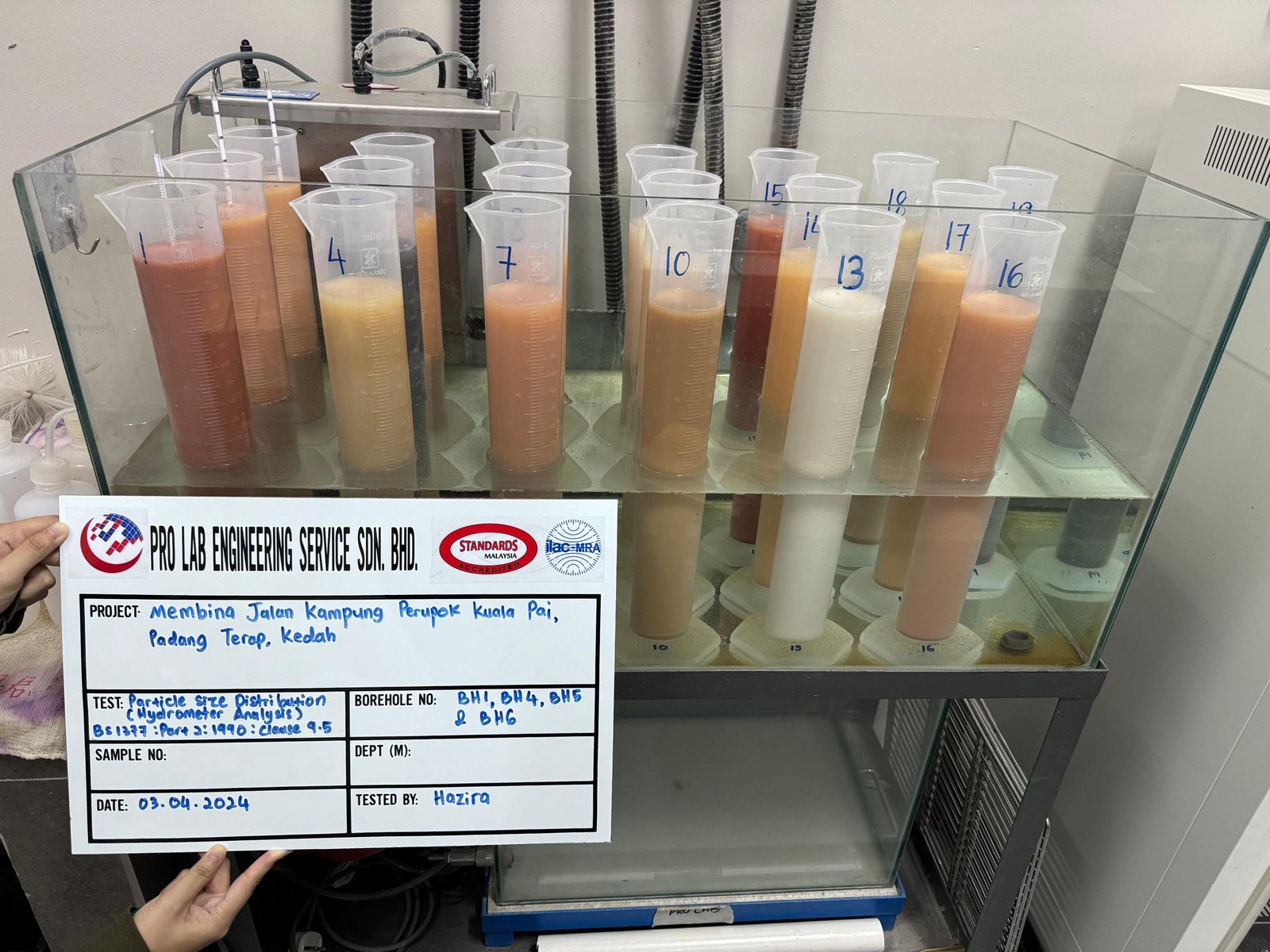
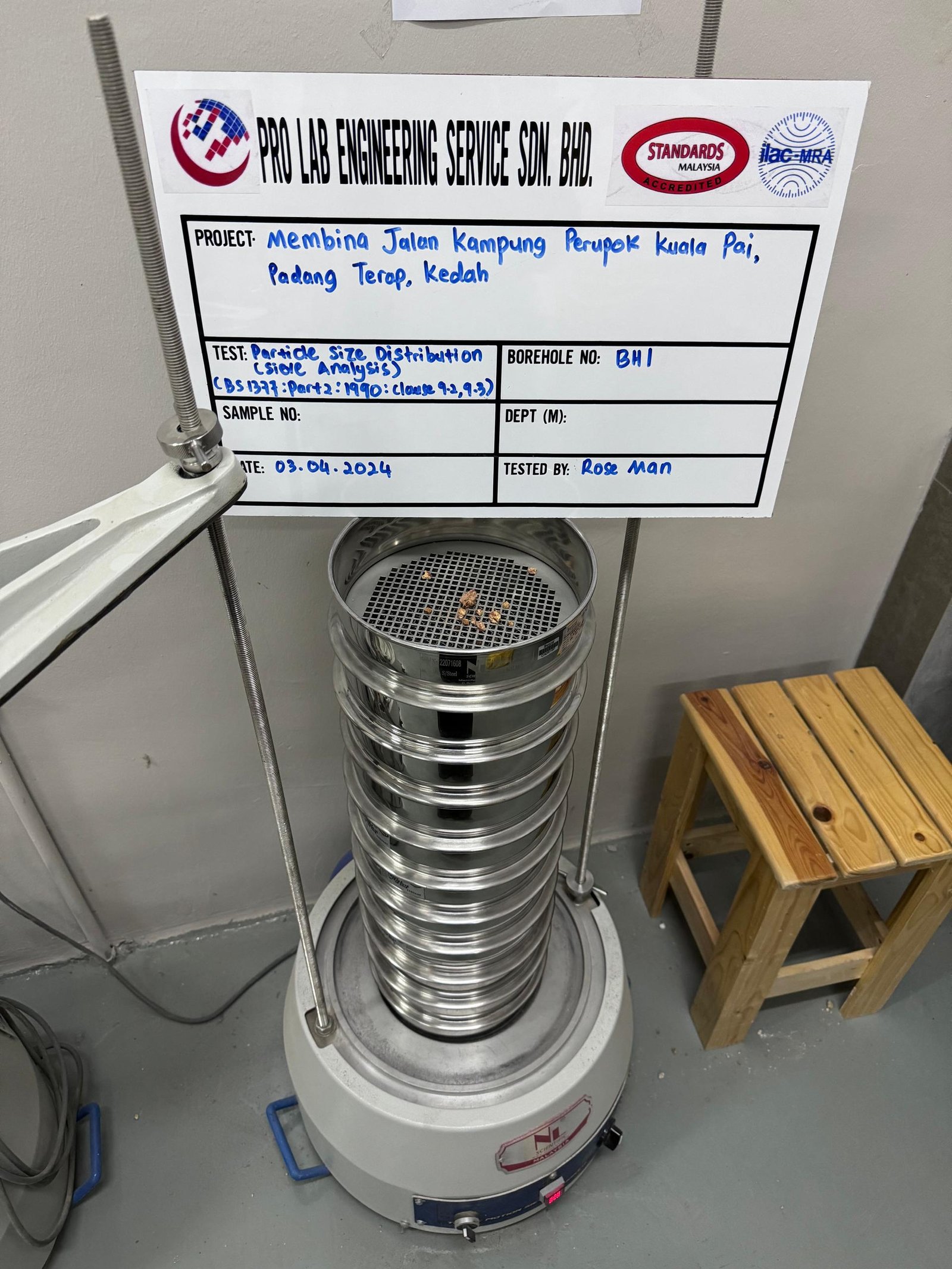
The purpose of determining particle size distribution (PSD) is to measure the different sizes of particles present in a soil sample. Soil classification based on PSD is essential for assessing its suitability for different construction applications, such as foundation design. Soil bearing capacity and settlement behavior are influenced by its particle size distribution. Well-graded soils, which contain a mix of fine and coarse particles, provide better load-bearing properties and reduce settlement compared to poorly graded soils. Hence, PSD testing helps engineers determine the most suitable foundation type for a specific soil.


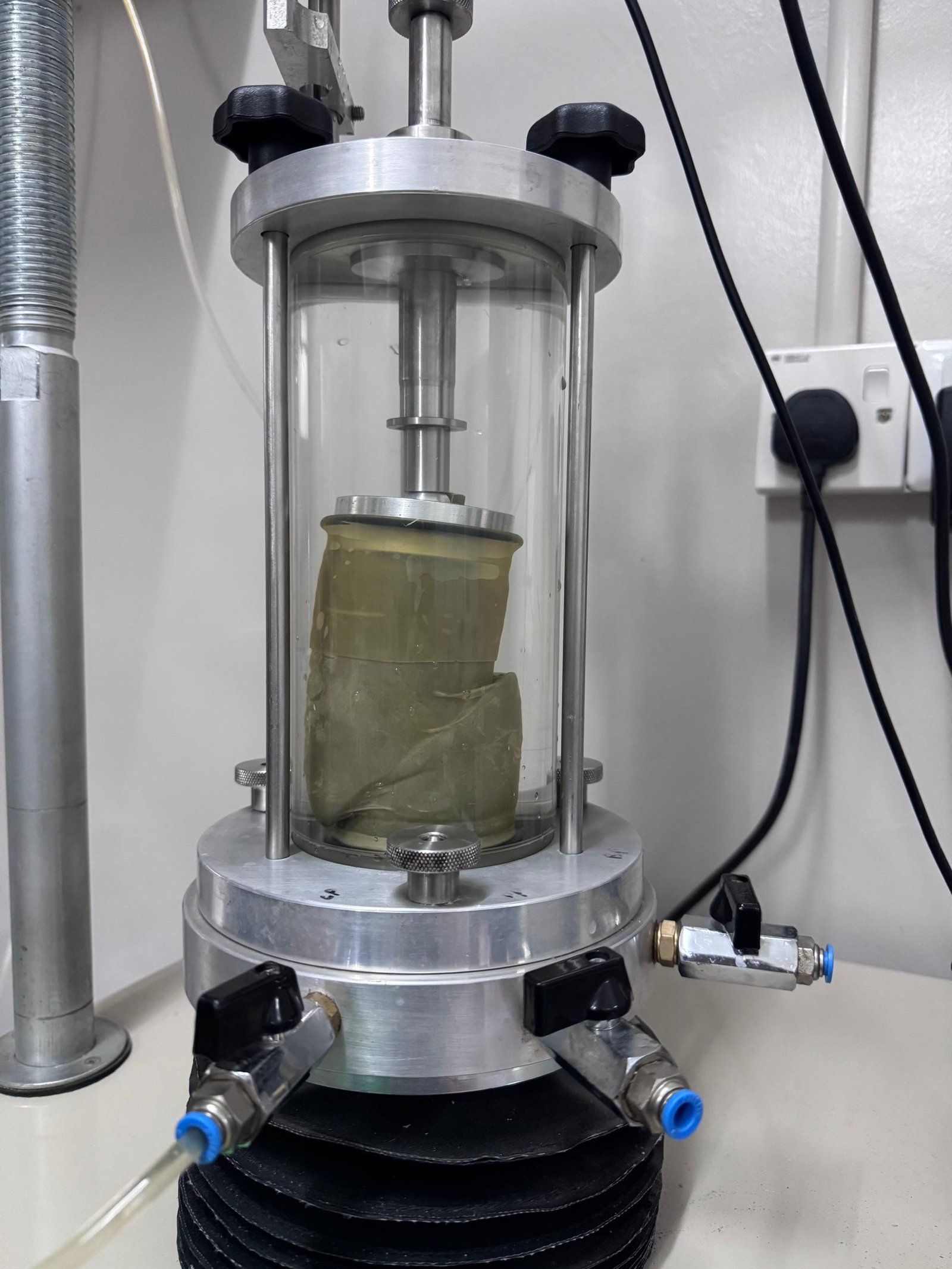
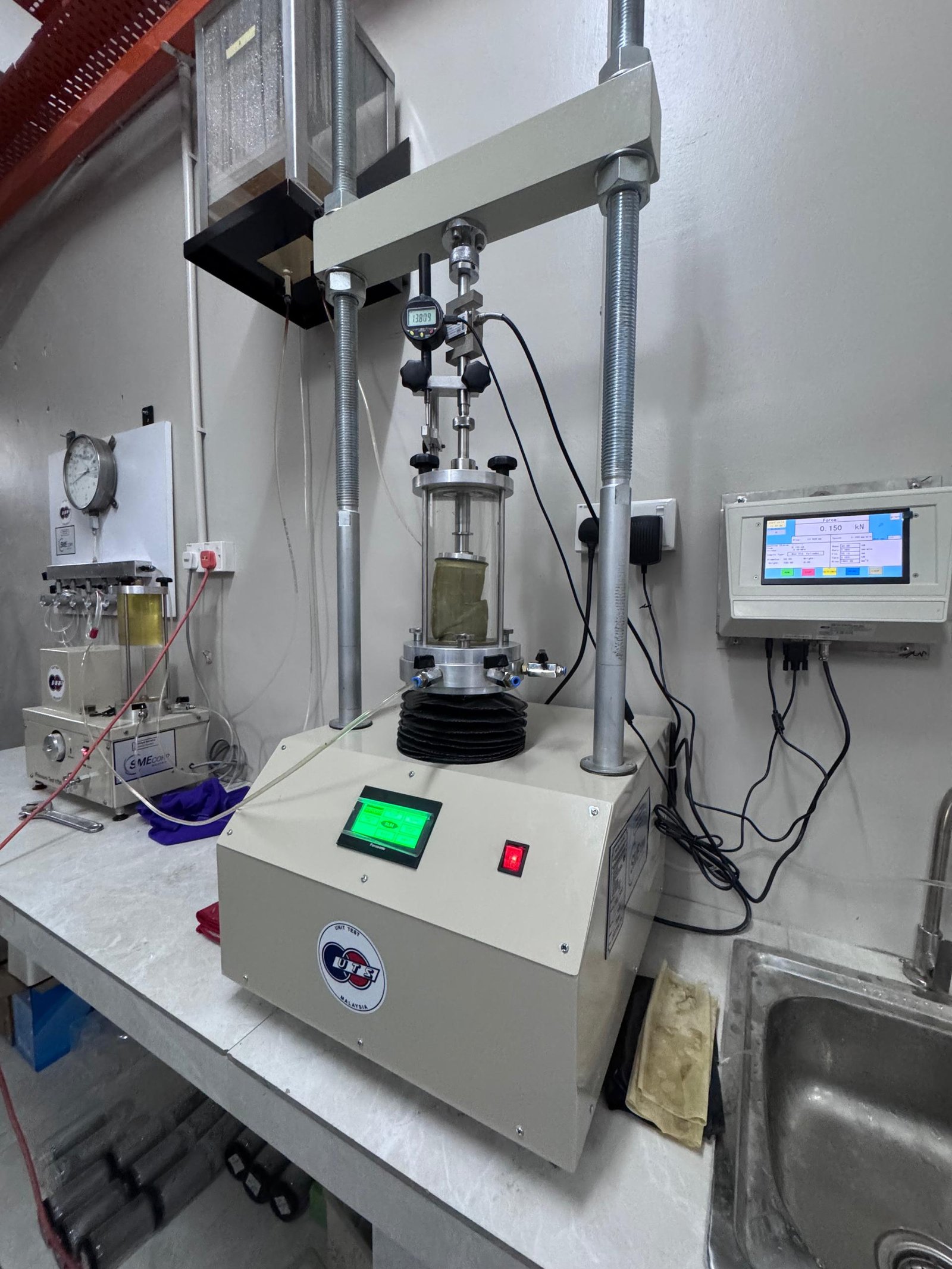
The primary objective of the UU Triaxial Compression is to determine the shear strength parameters of soil, specifically its cohesion (c) and friction angle (φ). These parameters are crucial for understanding how soil will respond to applied loads, especially under stress and strain conditions. By analyzing the stress-strain relationship from the test, engineers can predict soil failure and stability, estimating the failure envelope of the soil. This insight enables engineers to forecast when and how a soil sample might fail under specific loads, facilitating the design of more stable structures and helping to prevent potential soil failure.
The primary purpose of this test is to assess the shear and compressive strength of cohesive soils, such as clay, in both undisturbed and remolded conditions. The UCS value is vital for designing foundations for structures like buildings, bridges, and roads. Understanding the soil’s compressive strength helps estimate its load-bearing capacity, which is essential for safe and efficient foundation design. Additionally, the test can be used to evaluate the effectiveness of soil improvement techniques, such as stabilization, by comparing the UCS values of untreated and treated soil samples.
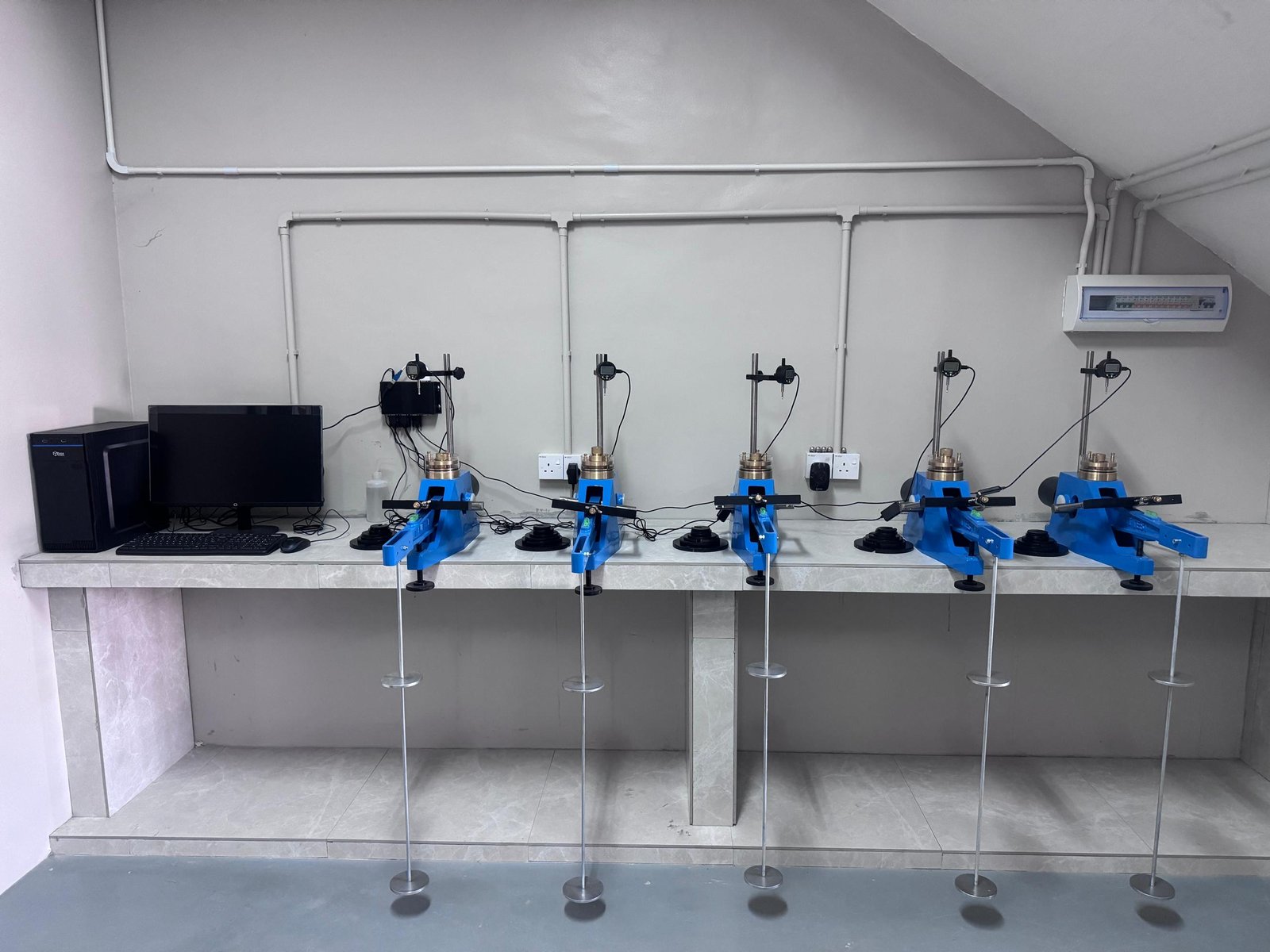
The objective of the one-dimensional consolidation test is to measure the change in volume and the resulting settlement of a soil sample under a vertically applied load over time. Key parameters obtained from this test include the Coefficient of Consolidation (cv), the Compression Index (cc), and the Coefficient of Volume Compressibility (mv). This test is crucial for understanding the behavior of clayey soils under loading conditions, offering essential data for the design of foundations, embankments, and other structures, particularly in areas where excessive settlement is a concern.
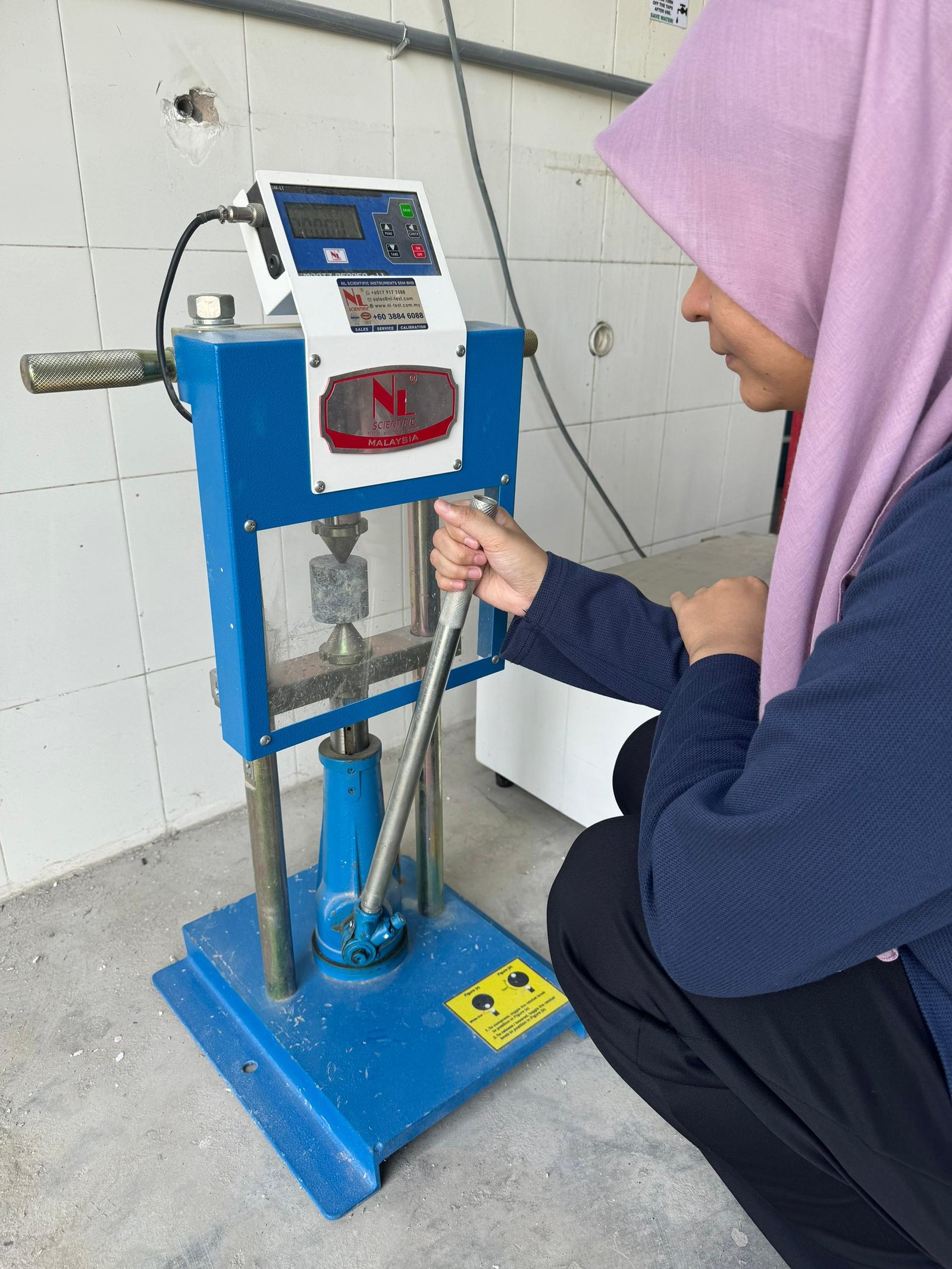
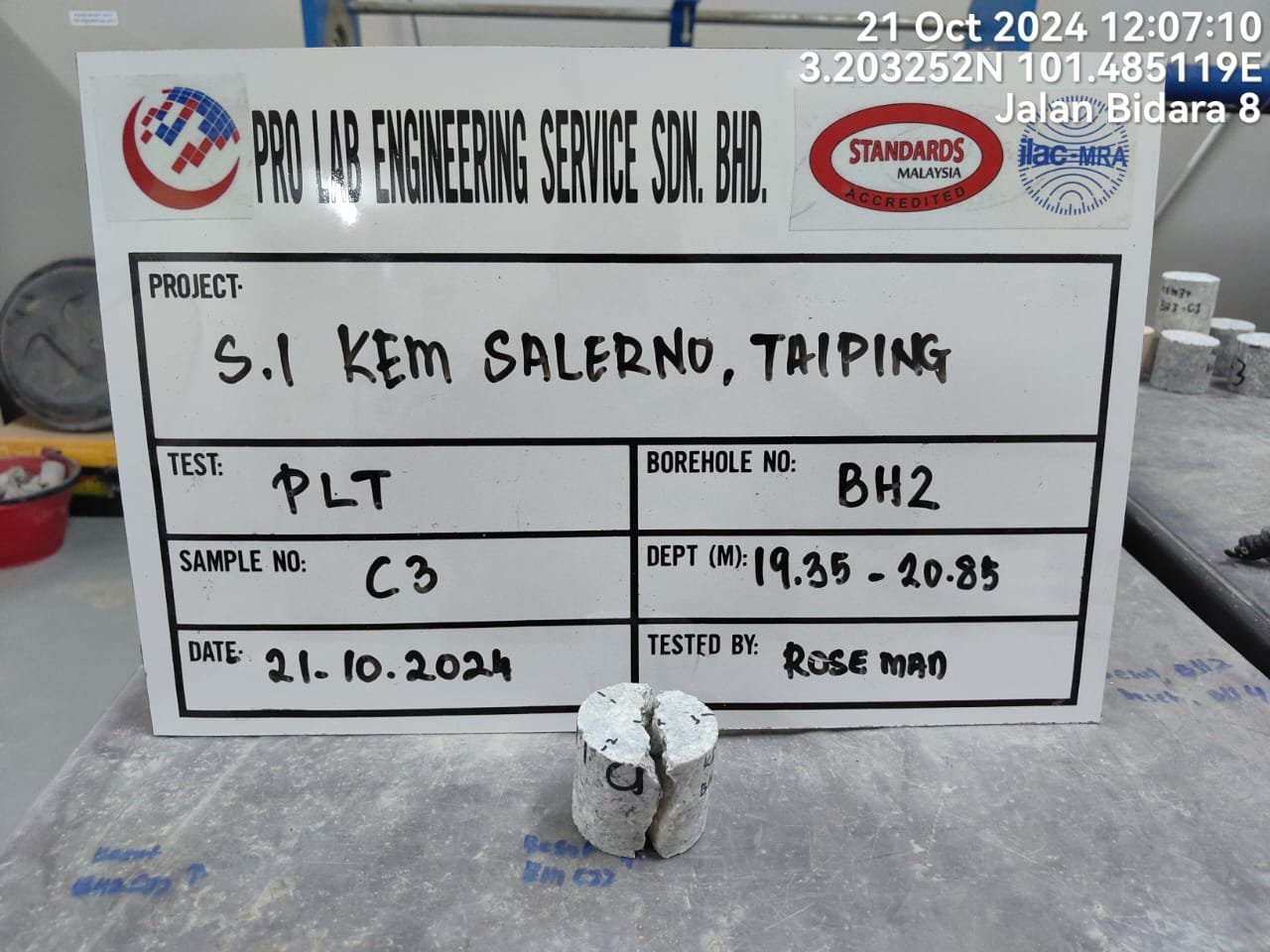
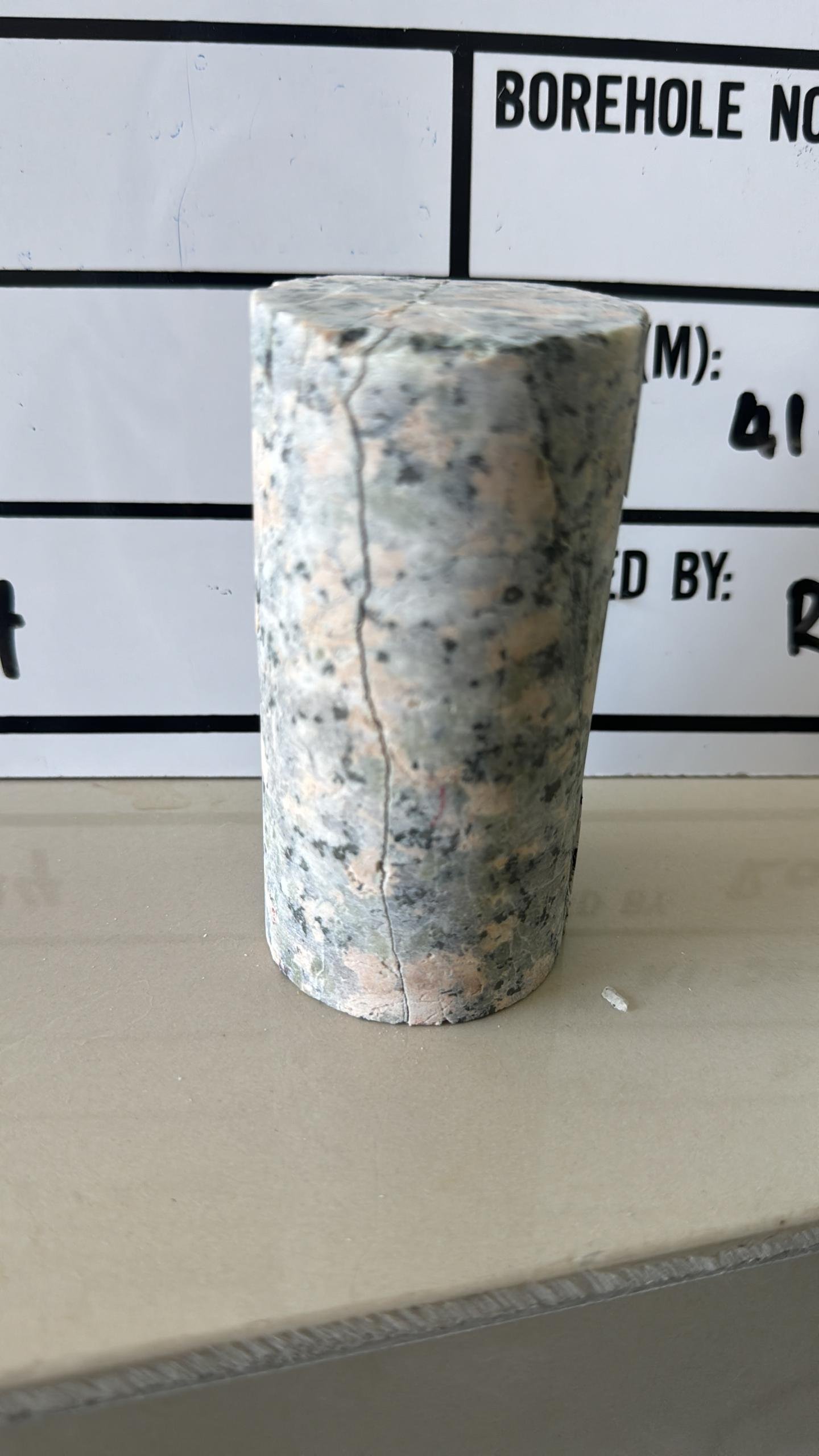
The point load strength index test is designed to assess the strength of rock materials by applying a localized force to a rock sample until failure occurs. This test is used as an index for classifying the strength of rock materials, known as the strength designation, and is widely used in geological and engineering studies. It helps categorize rocks into various strength levels, providing valuable insight into how the rock will perform under stress. The strength designation is often utilized in geotechnical evaluations, as stronger rocks offer more stable foundations, while weaker rocks may require additional reinforcement.
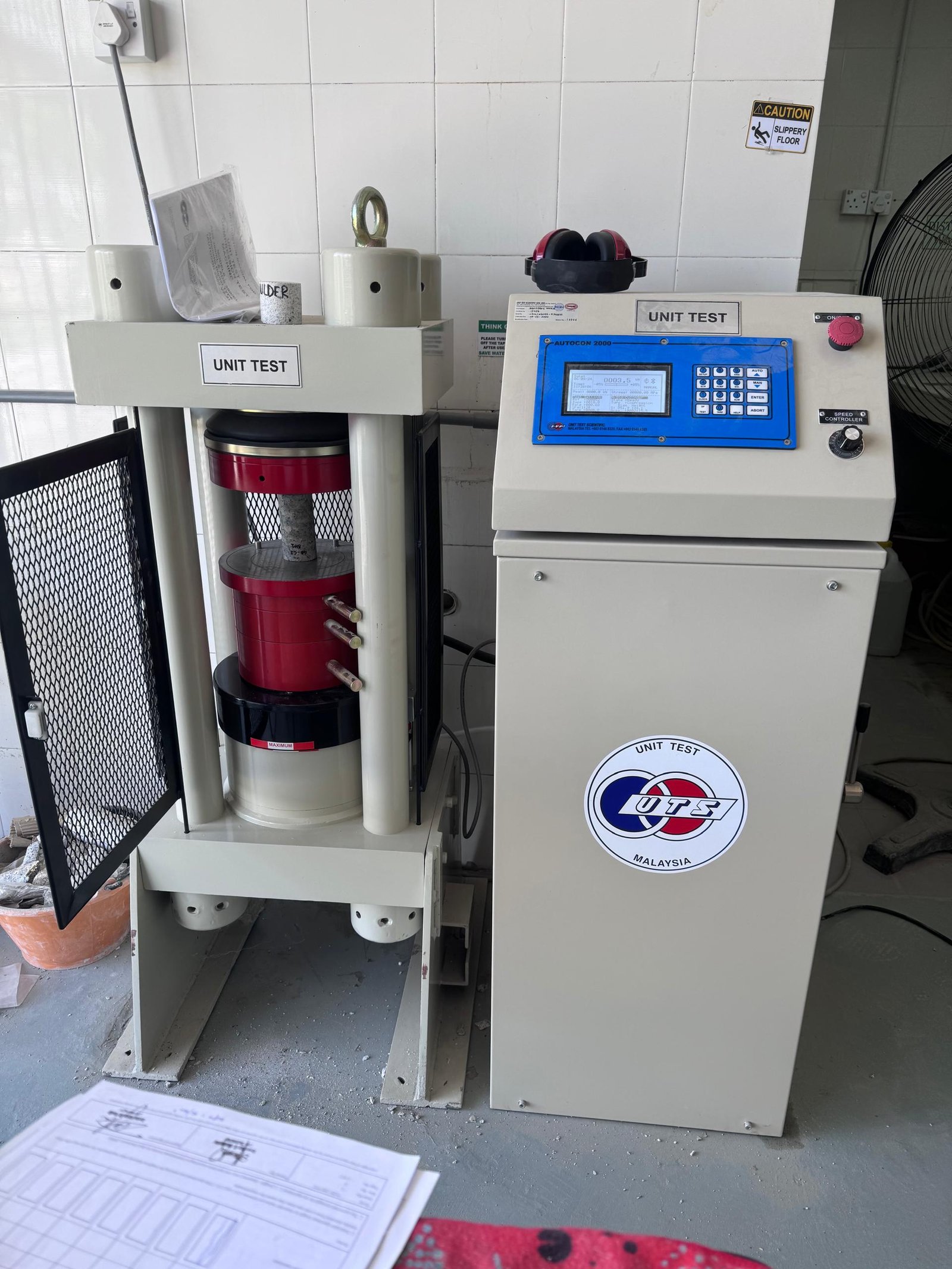
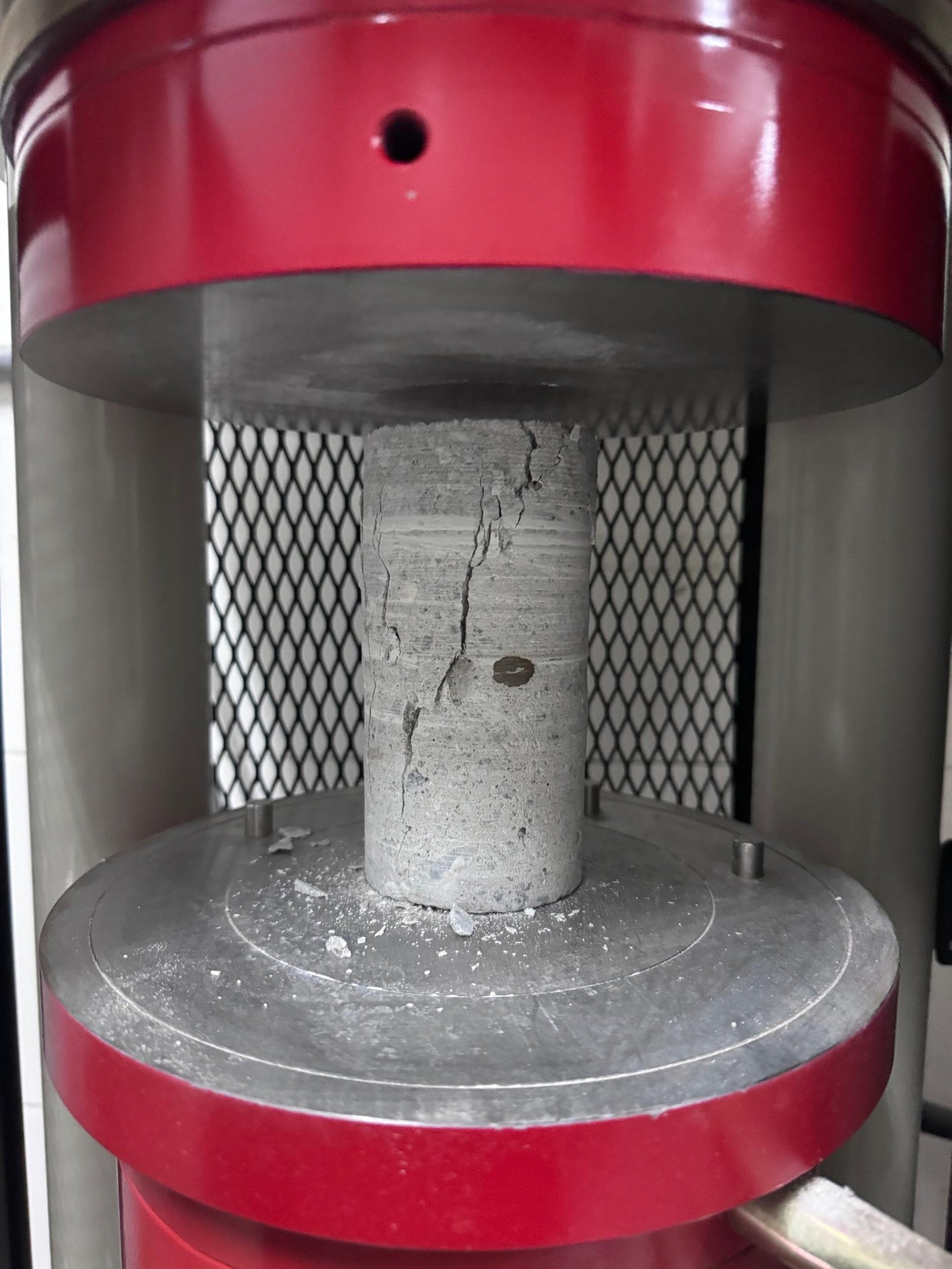
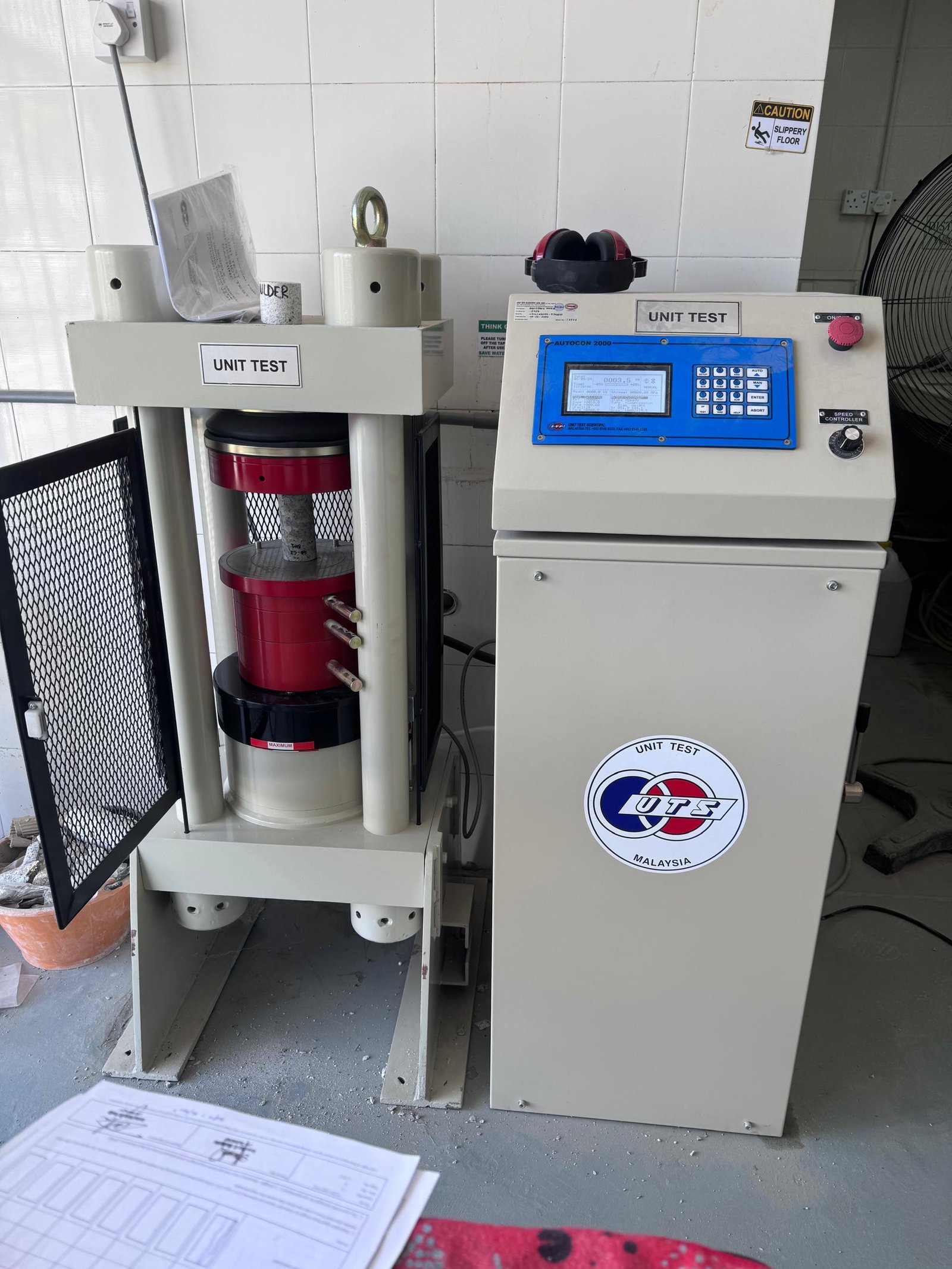
The Uniaxial Compression Test (UCS) is used to determine the compressive strength of rock specimens, and it is one of the most commonly used tests in geotechnical and rock mechanics studies, as it provides important information about the strength and behavior of rocks under stress. UCS results help in predicting how a rock will behave under the stresses it will face in the real world. For example, high UCS indicates that the rock can withstand more compressive forces without failing, which is crucial for projects that involve deep excavation.
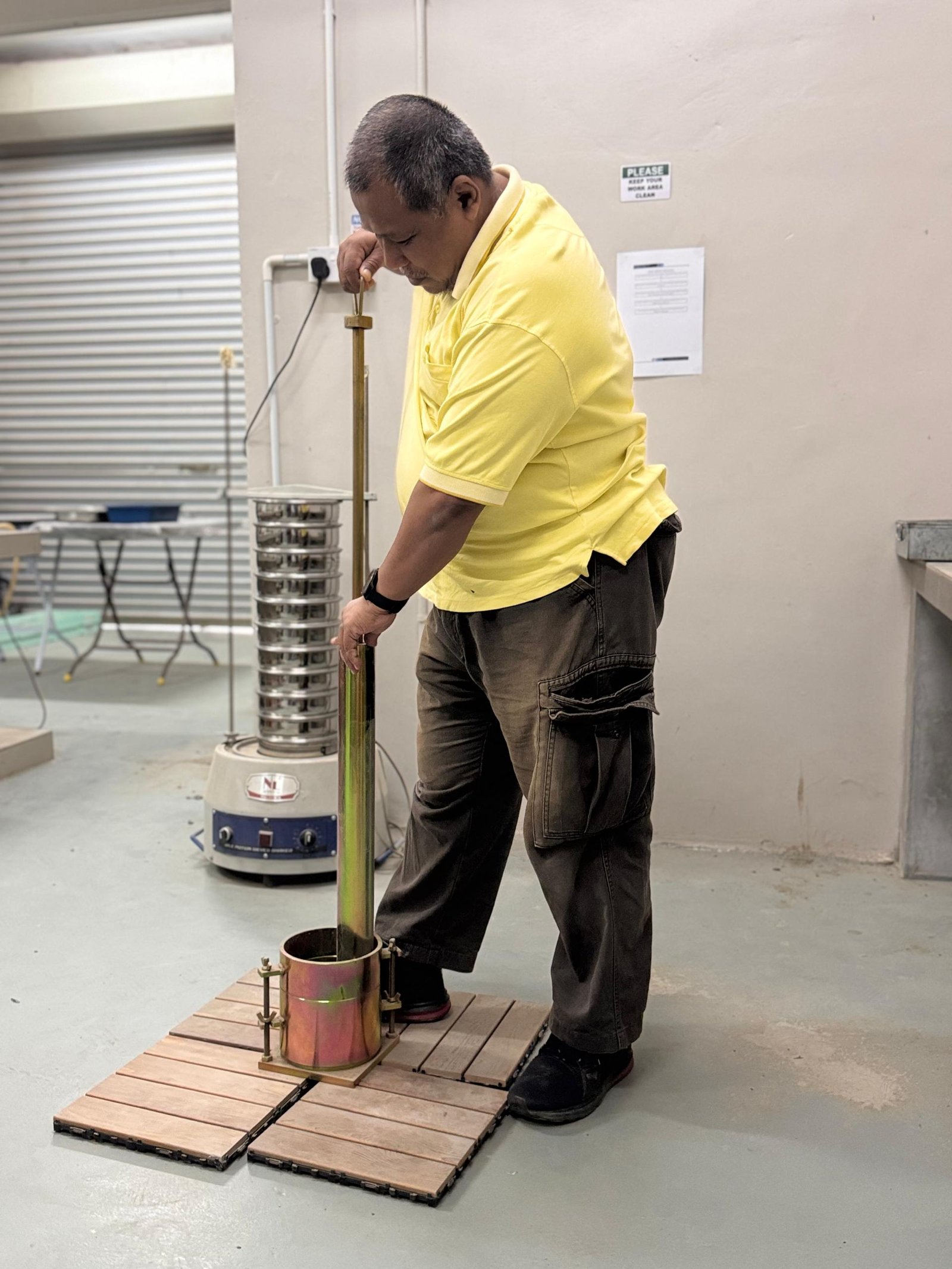
The objective of the test is to obtain relationships between compacted dry density and soil moisture content, using two magnitudes of manual compactive effort. This relationship is especially important in construction projects like foundation design, road construction, and earthworks. The primary parameters obtained from this test are Optimum Moisture Content (OMC) and Maximum Dry Density (MDD). The OMC and MDD provide target values for field compaction to ensure that the soil achieves sufficient strength and stability.
The Concrete Cube Compressive Strength Test is a method used to determine the compressive strength of hardened concrete specimens. This test is crucial for quality control and ensuring compliance with standards, as it verifies that the concrete mix meets the required strength and performs as expected under load. Additionally, it plays a key role in design verification, allowing engineers to confirm that the concrete mix design meets structural requirements. If the test results are below the expected strength, adjustments can be made to the mix design or construction practices.
8:30 am to 5:30 pm
8:30 am to 12:30 noon
Classification Test
Soil Strength Test
Rock Strength Test
Compaction Test
Concrete Cube
Compressive Strength Test
© PRO LAB ENGINEERING SERVICES SDN. BHD